TonicNest may earn a commission if you buy through links on this page, at no extra cost to you. That does not change what we report.
Part of our Prostate 911 overview. Last checked October 27, 2026.
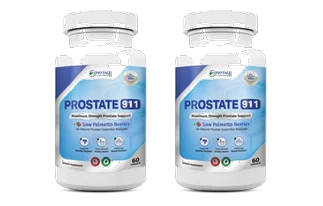
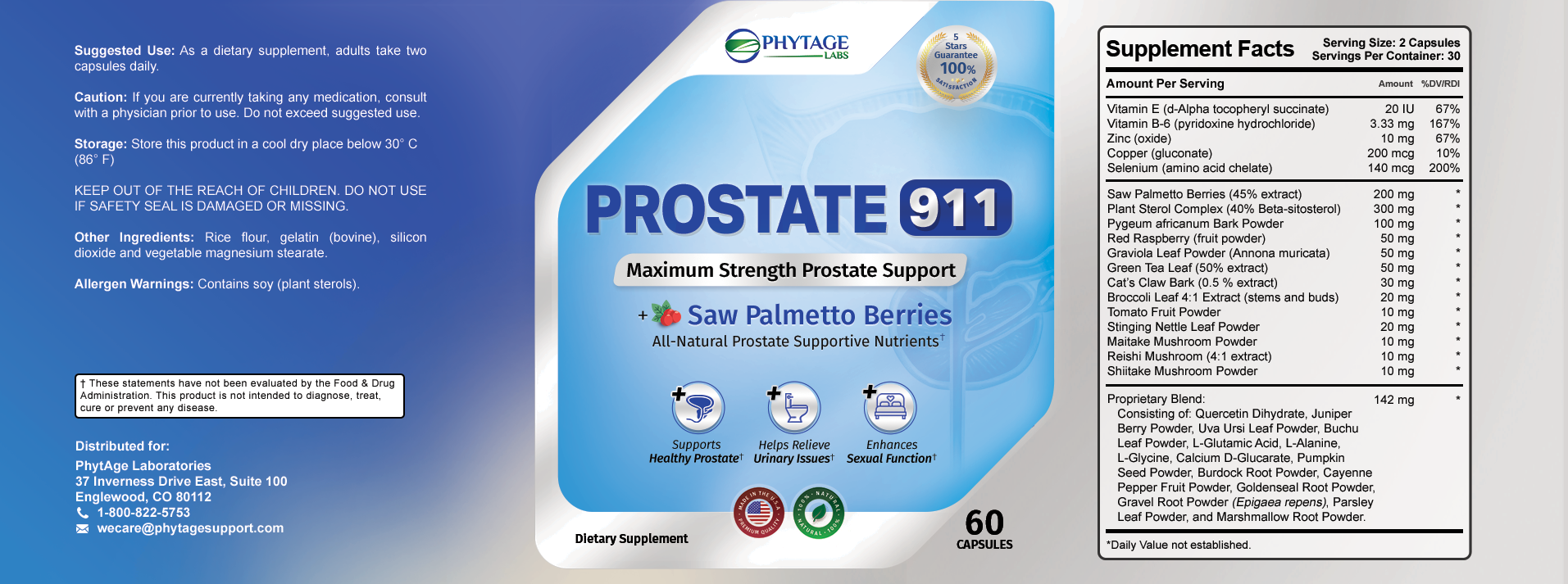
Prostate 911 ingredients are 18 disclosed items led by saw palmetto, plant sterols and pygeum, plus a 142 mg proprietary blend of 15 more whose individual amounts are not printed[1]. One 2-capsule serving gives 200 mg of saw palmetto, 300 mg of a plant sterol complex (about 120 mg beta-sitosterol) and 100 mg of pygeum bark powder. Only the beta-sitosterol amount matches doses used in prostate trials[3].
Prostate 911 ingredients at a glance
The table lists every item on the Supplement Facts label we read on October 27, 2026, per 2-capsule serving[1]. "Not graded" means we hold no evidence card for that item in a prostate context.
| Ingredient (label form) | Main use studied | Amount disclosed? | Evidence grade |
|---|---|---|---|
| Saw palmetto berries, 45% extract | BPH urinary symptoms | Yes, 200 mg | Weak: no benefit over placebo |
| Plant sterol complex, 40% beta-sitosterol | BPH symptoms; LDL cholesterol | Yes, 300 mg (about 120 mg beta-sitosterol) | Limited |
| Pygeum africanum bark powder | BPH symptoms | Yes, 100 mg | Limited (for extracts) |
| Stinging nettle leaf powder | Root, not leaf, studied in BPH | Yes, 20 mg | Not graded (leaf) |
| Zinc (oxide) | Prostate cancer risk studies | Yes, 10 mg | Weak |
| Selenium, vitamin E, vitamin B6, copper | Nutrients | Yes | Not graded for prostate |
| Red raspberry fruit powder | Pregnancy, knee pain (leaf) | Yes, 50 mg | Not graded |
| Graviola leaf powder | Cancer claims | Yes, 50 mg | Avoid |
| Green tea leaf, 50% extract | Weight | Yes, 50 mg | Weak; liver caution |
| Cat's claw bark | Arthritis | Yes, 30 mg | Limited; interaction flags |
| Broccoli leaf extract; tomato powder | Blood sugar (broccoli sprouts) | Yes, 20 mg; 10 mg | Weak; tomato not graded |
| Maitake, reishi, shiitake | Immune markers | Yes, 10 mg each | Weak to Limited |
| Goldenseal root | Drug interaction studies only | No (blend) | Weak; avoid with CYP drugs |
| Uva ursi leaf | Urinary tract infection | No (blend) | Avoid for daily use |
| Pumpkin seed powder | BPH symptoms | No (blend) | Limited |
| Buchu, juniper, quercetin, burdock, marshmallow root | Lab, animal or other uses | No (blend) | Weak |
| Cayenne, gravel root, parsley, calcium D-glucarate, L-glutamic acid, L-alanine, L-glycine | None for prostate | No (blend) | Not graded |
What is in each ingredient, and what does research say?
Three ingredients carry the prostate evidence. The rest are small amounts or hidden shares of the blend, grouped below.
Saw palmetto (200 mg)
Saw palmetto is the berry of a small palm native to the southeastern US. A 2023 Cochrane analysis of 27 studies and 4,656 men found little to no difference from placebo for urinary symptoms over 3 to 6 months and again at 12 to 17 months[2]. The CAMUS trial raised the dose from 320 to 960 mg a day for 72 weeks and still found no benefit[4]. Prostate 911 gives 200 mg, below the 320 mg standard trial dose, and its "45% extract" does not say 45% of what.
Plant sterol complex (300 mg, about 120 mg beta-sitosterol)
Beta-sitosterol is the main plant sterol. A Cochrane review of 4 trials and 519 men with BPH found symptom scores 4.9 points lower than placebo and peak flow 3.91 mL/s higher over 4 to 26 weeks, with no change in prostate size[3]. Trials used 60 to 130 mg a day, so 120 mg is in range. The trials were few, small and from the 1990s. Grade: Limited.
Pygeum africanum (100 mg bark powder)
Pygeum comes from African plum bark. A Cochrane review of 18 trials and 1,562 men found men were twice as likely to report overall improvement, with 19% less night-time urination[5]. Trials were small, short and used standardized extracts at 75 to 200 mg a day, not plain bark powder. Grade: Limited.
Stinging nettle leaf (20 mg)
BPH trials used nettle root extract, for example 450 mg a day for 12 weeks[6]. Prostate 911 lists 20 mg of leaf powder, a different plant part at under 5% of that dose, so the root data do not apply.
Vitamins and minerals
Zinc oxide 10 mg, selenium 140 mcg (200% of the Daily Value), copper 200 mcg, vitamin E 20 IU and vitamin B6 3.33 mg[1]. No zinc trial for BPH was found; in a study of 46,974 men only intakes above 100 mg a day were linked to advanced prostate cancer[7]. The 140 mcg of selenium is under the 400 mcg adult upper limit[8]. The 20 IU of vitamin E is far below the 400 IU tied to higher prostate cancer risk in the SELECT trial[9].
The 10 to 50 mg botanicals
Graviola, green tea, cat's claw, broccoli, tomato, red raspberry and three mushrooms appear at 10 to 50 mg each. None has a prostate trial in our evidence cards. Graviola is the concern: Caribbean studies tied regular soursop tea and fruit to atypical parkinsonism[10].
The 142 mg proprietary blend
Goldenseal, uva ursi, buchu, juniper, quercetin, pumpkin seed, burdock, cayenne, gravel root, parsley, marshmallow root, calcium D-glucarate and three amino acids share 142 mg. Goldenseal slowed the breakdown of a test drug in human studies[11]. Uva ursi releases hydroquinone and was studied only in 5-day courses[12]. Pumpkin seed oil did not clearly beat placebo in its largest BPH trial[13].
How transparent is the Prostate 911 formula?
Partly. Prostate 911 discloses amounts for 18 items, which is more than many prostate formulas, but it hides 15 amounts inside a 142 mg proprietary blend[1]. Split evenly, that is about 9.5 mg per item, though the real split is unknown.
Two other points come from label arithmetic. The 300 mg plant sterol complex at 40% gives 120 mg of beta-sitosterol. The saw palmetto "45% extract" does not name the compound measured.
Other ingredients are rice flour, bovine gelatin, silicon dioxide and vegetable magnesium stearate. The label says "Contains soy (plant sterols)", so the capsules are not vegetarian and not soy-free. We read the vendor's label image on October 27, 2026. If a third-party list differs, the vendor label wins; check the bottle you receive.
Ingredient safety and interactions
Most disclosed ingredients were well tolerated in trials. Saw palmetto side effects were mild and similar to placebo[2]. The cautions sit mostly in the blend:
- Goldenseal: inhibited CYP3A and CYP2D6 liver enzymes in human studies, which affects many prescription drugs[11].
- Uva ursi: short courses only in trials; eye damage was reported after 3 years of use[12].
- Green tea extract: rare liver injury, mostly from extract capsules[14].
- Soy and bovine gelatin: relevant for allergies and diets.
Read the full list on our Prostate 911 safety and interactions guide, and ask a pharmacist before starting if you take any prescription medicine.
Do these ingredients prove Prostate 911 works?
No. Ingredient trials test one item at one dose and form; no trial has tested the Prostate 911 capsule. Its saw palmetto failed against placebo in large trials, its pygeum is in a different form from the studied extracts, and its nettle is the wrong plant part. Only beta-sitosterol lines up, and its evidence is limited.
Our does Prostate 911 work guide sets out what can and cannot be concluded. For dosing, see how to take Prostate 911.
Back to the Prostate 911 overview.
Frequently asked questions
Does Prostate 911 contain saw palmetto?
Yes. Each 2-capsule serving lists 200 mg of saw palmetto berries as a 45% extract, without saying 45% of what. Large trials at 320 mg a day and higher found saw palmetto no better than placebo for urinary symptoms.
How much beta-sitosterol is in Prostate 911?
About 120 mg per 2-capsule serving. The label lists a 300 mg plant sterol complex at 40% beta-sitosterol. That falls inside the 60 to 130 mg daily range used in older BPH trials, which showed modest, short-term symptom gains.
Is Prostate 911 vegetarian?
No. The capsules are made with bovine gelatin, according to the label. The other ingredients are rice flour, silicon dioxide and vegetable magnesium stearate. The label also says the product contains soy from the plant sterols.
What is in the Prostate 911 proprietary blend?
Fifteen items share 142 mg: quercetin, juniper, uva ursi, buchu, three amino acids, calcium D-glucarate, pumpkin seed, burdock, cayenne, goldenseal, gravel root, parsley and marshmallow root. The label gives no individual amounts.
Does Prostate 911 have side effects?
No study of Prostate 911 recorded side effects. Its main ingredients were mild in trials, but the blend holds goldenseal, which affects how the liver clears many drugs, and uva ursi, studied only in short courses. Ask a pharmacist if you take medicine.
Sources
- Prostate 911 Supplement Facts label image. Prostate 911 vendor, read October 27, 2026.
- Serenoa repens for the treatment of lower urinary tract symptoms due to benign prostatic enlargement. Cochrane Database of Systematic Reviews, 2023, read October 2, 2026.
- Beta-sitosterols for benign prostatic hyperplasia. Cochrane Database of Systematic Reviews, 2000, read October 20, 2026.
- Effect of increasing doses of saw palmetto extract on lower urinary tract symptoms (CAMUS). JAMA, 2011, read October 2, 2026.
- Pygeum africanum for benign prostatic hyperplasia. Cochrane Database of Systematic Reviews, 2002, read October 20, 2026.
- Stinging nettle root extract trial in BPH (Karami 2020). PubMed, read October 2, 2026.
- Zinc supplement use and risk of prostate cancer (Leitzmann 2003). PubMed, read October 2, 2026.
- Selenium Fact Sheet for Health Professionals (archived copy). NIH Office of Dietary Supplements, read October 20, 2026.
- Vitamin E and the risk of prostate cancer: SELECT. JAMA, 2011, read October 19, 2026.
- Annonaceae herbal tea use and atypical parkinsonism in Caribbean patients. PubMed, read October 27, 2026.
- Goldenseal and CYP2D6 and CYP3A4/5 activity in healthy volunteers (Gurley 2005). PubMed, read October 27, 2026.
- Bull's eye maculopathy after long-term uva ursi use. PubMed, read October 27, 2026.
- Pumpkin seed extract in men with BPH: GRANU trial. PubMed, read October 20, 2026.
- Green Tea. NCCIH (NIH), read October 2, 2026.
This page is general information, not medical advice. Dietary supplements are not reviewed by the FDA for safety or effectiveness before they are sold and are not intended to diagnose, treat, cure or prevent any disease. Talk to your doctor before taking any supplement, especially if you are pregnant, nursing, take medication or have a health condition.